



Mani Rimdu Festival in the Khumbu (Everest) Region of Nepal
Overview: Festival on the Lap of Mount Everest
The Mani Rimdu Festival is a vibrant and deeply spiritual celebration that takes place in the Khumbu region of Nepal, specifically at Tengboche Monastery, which lies on the route to Everest Base Camp. This sacred festival is celebrated by the Sherpa community, followers of the Mahayana-Nyingma-pa sect of Tibetan Buddhism. It honors Guru Rinpoche (Padmasambhava)—the revered Buddhist master who introduced Buddhism to Tibet in the 8th century and is credited with establishing Buddhism in the Himalayan regions.
Celebrated since 1930 A.D. in Tengboche Monastery, the Mani Rimdu festival is a mix of spiritual practice, ritual dance, and communal celebration.
Timing: Based on the Tibetan Lunar Calendar
The festival usually takes place in November, aligned with the full moon of the tenth Tibetan month. However, the exact dates vary each year according to the Tibetan lunar calendar. This timing is significant as it coincides with the end of the harvest season, allowing the local Sherpa people from villages across the Khumbu region to gather and celebrate after completing their agricultural duties.
Spiritual and Cultural Significance
Mani Rimdu is more than just a festival—it’s a ritualistic reenactment of the founding of Buddhism in Tibet. The festival symbolizes the triumph of Buddhism over Bon, the indigenous shamanistic religion of Tibet and the Himalayas.
Monks prepare for weeks leading up to the event through prayers, meditation, and rituals. The central features of the festival include:
1. Ritual Ceremonies and Mandala Creation
Monks build a large mandala (symbolic diagram) using colored sand and soil gathered from sacred points across the hills.
The creation of the mandala is an act of devotion and meditation, and it may take up to four full days to complete.
It represents the spiritual universe and is eventually destroyed at the end of the ceremony to symbolize the impermanence of life.
2. Masked Dance Performances
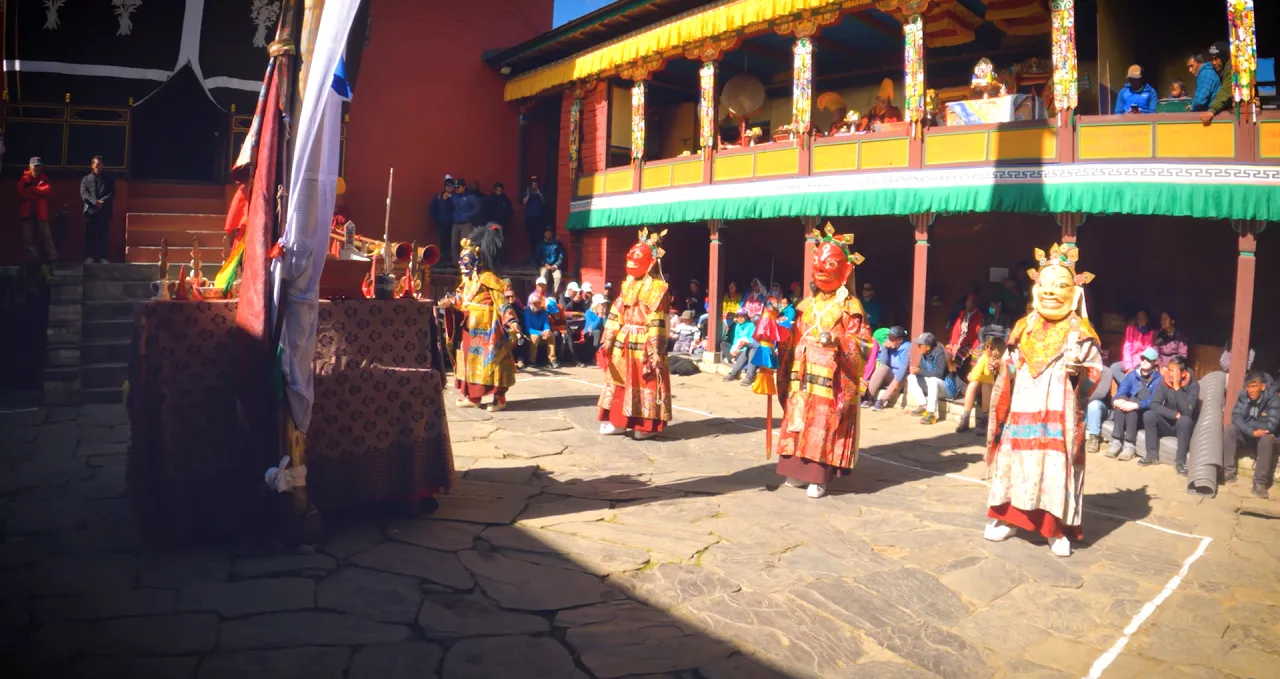
The monks perform 16 traditional masked dances known as “Cham” dances.
Each dance is symbolic and tells a story—often the battle between good and evil or the suppression of demonic forces by Buddhist deities.
The dancers wear elaborate costumes and ferocious masks representing deities and demons.
The atmosphere is filled with the sounds of chanting, horns, drums, and cymbals, creating a deeply spiritual and theatrical experience.
3. Public Blessings and Social Gatherings
The head Lama of Tengboche Monastery bestows blessings upon the attendees, both locals and trekkers.
Locals, dressed in their finest traditional attire, join the monks in prayers, singing, and merrymaking.
The festival brings together faith and festivity, strengthening community bonds and sharing cultural values with visitors.
Trekking Itinerary with Mani Rimdu Festival
Mani Rimdu is often included in Everest trekking itineraries. Here’s a typical route for travelers planning to witness the festival:
Day 1–2: Arrival in Kathmandu
Sightseeing in the cultural hub of Nepal.
Visit UNESCO World Heritage Sites like Swayambhunath, Boudhanath, and Pashupatinath.
Day 3: Flight to Lukla (2,860m / 9,383 ft)
Scenic 45-minute flight to one of the world’s most adventurous airports.
Start a 3-hour trek to Phakding (2,610m / 8,562 ft).
Day 4: Trek to Namche Bazaar (3,440m / 11,286 ft)
The main commercial hub of the Khumbu region.
A melting pot of Sherpas, trekkers, and traders, with a lively atmosphere and stunning mountain views.
Day 5: Trek to Tengboche (3,867m / 12,687 ft)
4–5 hours of trekking through rhododendron forests and mountain trails.
Arrival at Tengboche Monastery, the spiritual center of the Khumbu region.
Day 6–8: Mani Rimdu Festival Observance
Attend rituals, dances, and blessings over three days.
Experience Sherpa culture and spiritual traditions up close.
Day 9: Trek to Monjo (2,835m / 9,301 ft)
Begin the descent. A 5–6 hour trek leads back to the quieter village of Monjo.
Day 10: Trek to Lukla and Return to Kathmandu
Hike back to Lukla and prepare for your flight to Kathmandu.
Be mindful: flights can be delayed due to unpredictable Himalayan weather.
Why Mani Rimdu is a Unique Experience
Spiritual Journey: Offers insights into Tibetan Buddhism and Sherpa customs.
Visual Spectacle: The dances, mandalas, and masks create an unforgettable visual and auditory experience.
Cultural Immersion: Meet local families, monks, and villagers who have kept these traditions alive for centuries.
Off-the-Beaten-Path: Unlike mainstream festivals in Kathmandu or Pokhara, Mani Rimdu happens in a remote Himalayan setting.
Perfect Timing: Held during autumn, when the skies are clear, the landscapes vibrant, and trekking conditions ideal.
Travel Tips for Mani Rimdu Festival Trek
Book early: Since the festival attracts many trekkers, flights and lodges fill up quickly.
Check festival dates: Confirm with local tour operators since dates vary each year.
Acclimatize properly: Altitude sickness is a risk—take rest days in Namche.
Bring warm clothing: November nights in Tengboche are cold (often below freezing).
Respect local customs: Ask permission before photographing monks or rituals.
Final Thoughts
The Mani Rimdu Festival is a spectacular celebration of faith, heritage, and Himalayan culture. It not only reflects the spiritual life of the Sherpa people but also enriches your trekking journey with a profound cultural and emotional connection to the Everest region. More than just a hike to see mountains, this experience allows travelers to witness living traditions at the highest monastery in the world.
Plan your trip in October or early November, and combine the natural grandeur of Everest with one of the most colorful and meaningful Buddhist festivals in the Himalayas.


